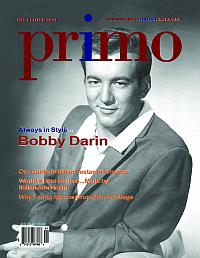
Bronx born Italian American Walden Robert Cassotto's talents are still cherished throughout our country and other countries all over the world. In 1956 Walden Cassotto changed his name to Bobby Darin; forever after recognized as the most versatile recording artist of his generation.One wedge of the pie in the entertainment field is not enough for recording artists of Darin's caliber. They want to broaden their skills to other avenues. What set Darin apart from the rest was his uncanny ability to engage in tasks with razor sharp precision and total clarity. Such depth of feel gave him the ability to reinvent himself with total credibility.
This is why Darin remains unique, a level above other entertainers. It may have been those tough blows life dealt him that made this poor boy from the projects such a gifted entertainer. Maybe it was the short life sentence thrown at him when he was eight years old, predicted not to live past 16 due to a weak heart brought on by childhood bouts with rheumatic fever. Whatever the reason, Darin set out to be a star not in just one genre but in many.
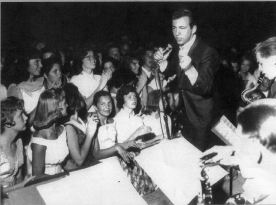
Darin appreciated and respected Frank Sinatra and Al Jolson. Yet, he knew his foot in the door came with the younger generation and Rock & Roll. Darin started penning rock tunes in 1958 and managed a number of hits alongside contemporaries Elvis Presley and Fats Domino. After hit singles "Splish Splash" and "Queen of the Hop," Darin then wrote a song that took him on a journey transcending the next genre of music. He wrote "Dream Lover," a song that not only solidified his teen idol status but also allowed a more mature audience the chance to embrace his melodic creations. By the time the next recording session was underway Darin made a swing LP. Atco Records considered him a Rock & Roll artist and were not pleased by Darin's change of style. But true to form, Darin insisted and the "That's All" LP was born. With songs like "Mack the Knife" and "Beyond the Sea" Darin now established himself more than just a teen idol. Thanks to a concept by his manager Steve Blauner, Darin teamed up with band leader Billy May to do an album of Johnny Mercer tunes, that Darin called "Two of a Kind."
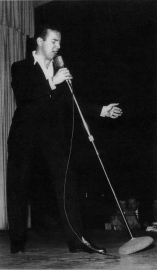
Darin frequented the Apollo Theater in Harlem in his younger days. There he was immersed in R&B and Soul. When he did a Ray Charles tribute LP he was nominated for a Grammy for his rendition of "What'd I Say." One of the main factors here that sets Darin apart from the rest was his ability to know exactly what a song should sound like in keeping with its true legitimacy in dialect. When it comes to standards, Darin learned phrasing and used it with perfection. When doing Rock & Roll and R&B Darin knew how to utilize elements of street slang. Connie Francis remembers Bobby telling her, "Race music, hillbilly music, Blues, they are the music of the future. Look at Elvis, Ray Charles and Fats D, the real thing is waiting in the wings, you'll see someday, the Blues will be pop music and you can't sound too educated like you took voice lessons cause the kids don't dig that."
There is no question that Darin wanted to be a legend by 25. Atlantic records engineer Tom Dowd said, "After 'Splish Splash' Bobby is now the teen idol up and down the East Coast, but Bobby goes to school, he learns how to walk on stage. He learns posture and hand motion. He did not just go out there and say, 'here I am.' He went to finishing school. He did everything, he took lessons, he worked at it. He aspired to be an actor, go on Broadway and be a recording artist. He wanted the whole nine yards and he did not wish for it, he went to work for it."
Darin jumped labels to Capitol Records and recorded two folk LPs along with a killer swing album once again with Billy May and his orchestra. He did a Country/Western LP with Big Band arrangements. He then came back to Altantic Records with a record of Broadway tunes and one of movie hits. In 1966 Darin transformed himself once again with records aimed at FM radio pop music giving him another hit back in the rock venue with the song, "If I Were a Carpenter."

In seeing and feeling the changing times, Darin decided the only way to creatively say what he wanted to, was to create his own record label. The birth of Direction Records brought him legitimacy with a new generation of artists in line with the Beatles and Neil Young. It was the music of the times, what was going on in the streets of our world.
By the early 1970's Darin's health started to deteriorate. Never compromising, he once again reinvented himself and managed to utilize all the styles and genre to create a Las Vegas show that appealed to all ages. He kept his core band of four and a small rhythm section. He performed "Mack the Knife" and "I've Got You Under My Skin" as well as songs by the Beatles, James Taylor and Bob Dylan, all blended beautifully like oils on canvas. The ability to dance and play piano, vibes, harmonica and drums along with comedy impressions gave Darin the reputation as one of the most comsummate entertainers of our times. Aside from Sammy Davis Jr., this was the difference between Darin and all the rest. By the time the early 1970s was upon us Darin landed a record deal with Motown records. His record labels alone show us just how diverse he was.
The legacy continues to grow. In 2004 Kevin Spaey brought a Darin biopic to theaters titled Beyond the Sea. Darin's star on the Walk of Las Vegas Stars can be found in front of the Flamingo Hotel and Casino. Bobby was the first artist to receive a Grammy for the newly formed category of Best New Artist. He was inducted into the Rock & Roll Hall of Fame and The Songwriters Hall of Fame. In 2010 he was honored with a Lifetime Achievement Grammy Award.
As for an acting career Darin showed right out of the gate how talented he was. By only having a few films under his belt he managed to get nominated for an Oscar for Best Supporting Actor in the film Captain Newman, M.D. with Gregory Peck and Tony Curtis. He gave an explosive performance in Stanley Kramer's Pressure Point with Sydney Poitier.
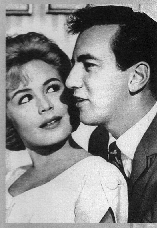
Darin married America's sweetheart Sandra Dee. They starred in three films together and had a son Dodd. Darin and Dee were one of three of the world's most recognzied couples in the 1960s, after John and Jackie and Richard and Liz.
Darin also was responsible for having the first African Americn comedian George Kirby as his opening act at the Copacabana. Social and racial justice was importnat to Darin. He met with the nightclub's owner who had refused to stage Kirby because he was black. Darin dug in his heels and did not bend until Kirby as allowed to perform.
Returning from giving his time and support to Bobby Kennedy, Darin learned of the candidate's assassination. Darin was there as many were, while the train carried the coffin to Kennedy's final destination. Darin refused to be photographed at the ceremony and after it was over and all left, he remained at the grave site holding a vigil alone until the night crew came to bury the casket.
Many such stories of Darin have surfaced over the years by those who love and miss him. They enable us to truly comprehend how a child with all the odds against him overcame hurdles to ultimately become so many people in one body. Darin wears the mantle of singer, songwriter, actor, music publisher, activist, humanitarian and a man whose Italian American heritage makes us proud.
Bobby's damaged heart had enough beat in it to become a legend and live far longer in our culture than the time he lived on earth.
JIMMY SCALIA WAS HOOKED THE FIRST TIME HE HEARD BOBBY DARIN IN 1968 . . .
A native of Lodi, New Jersey, one of America's most concentrated Italian American communities, Scalia was a lot like his peers. He listened to Dion, the Four Seasons and Motown. He liked Elvis and the Beatles. Music trends seemed to change on a monthly basis in the 60s. Through it all, Darin was always in style.
"I'd stay up at night and watch Darin's variety shows with my dad," says Scalia. "I am into rock and my dad loves Big Band music. And yet, we both liked Bobby Darin. That's the way it was with Darin. He appealed to everyone."
Scalia amassed an impressive collection of Darin's songs and other memorabilia. He forged a close friendship with Darin's son Dodd, who along with Steve Blauner, named Scalia the official archivist for Bobby Darin.
Darin's work has gained newfound popularity thanks in large part to the film Beyond the Sea by Kevin Spacey. With so many songs written and performed by Darin, the question arises as to what was Darin's best. PRIMO asked Scalia to name what he considers the best songs written and sung by Darin. Here's what he had to say.
BEST SONGS DARIN WROTE . . .
Dream Lover
"What is a great song? It is a song that you hear for the first time and by the second chorus you are already humming it. This is 'Dream Lover,' a hit song if there ever was one."That's the Way Love Is
"Darin writes 'Queen of the Hop' and 'Splish Splash,' and then turns around and writes a beautiful song 'That's the Way Love Is.' The song establishes Darin's versatility and legitimacy as a song writer."I'll Be There
"The song was not a big hit for Darin. But it was a big hit for Gerry and the Pacemakers. Originally popular with teenagers, the song has become timeless because of its great melody."Simple Song of Freedom
"The song was written by Darin when he started Direction Records. It was the late 60s and Darin joined many in opposing the Vietnam War by writing the song. It has a meaning that never diminshes.BEST SONGS DARIN SANG . . .
You're Nobody Till Somebody Loves You
"He is cool, ice cool. There is that slight smirk and wink. He starts out slow in a swing beat and then picks it up to make it a show stopper.Everybody Has the Right to Be Wrong
"The song was from the 1965 Broadway musical 'Skyscraper.' Darin was never in a Broadway show. This song gives us a taste of what he might have been like on the Broadway stage."Can't Take My Eyes Off You
"The Four Seasons made it famous. But Darin's rendition is even more powerful. He changed it totally. He starts out slow and by the end is singing with all his might. It is a masterpiece performance."Ave Maria
"My in-laws from Avellino sang 'Ave Maria' while surviving the bleak days of World War II. Years later Darin sang 'Ave Maria' in the traditional style while contemporaries such as Connie Francis and others performed Christmas songs in a rock style. Darin does not revise the song and so his performance is all the more memorable for it."
Home | News | Bobby | Career | Fun | Fans | Specials
bobbydarin.net, All Rights Reserved.